






































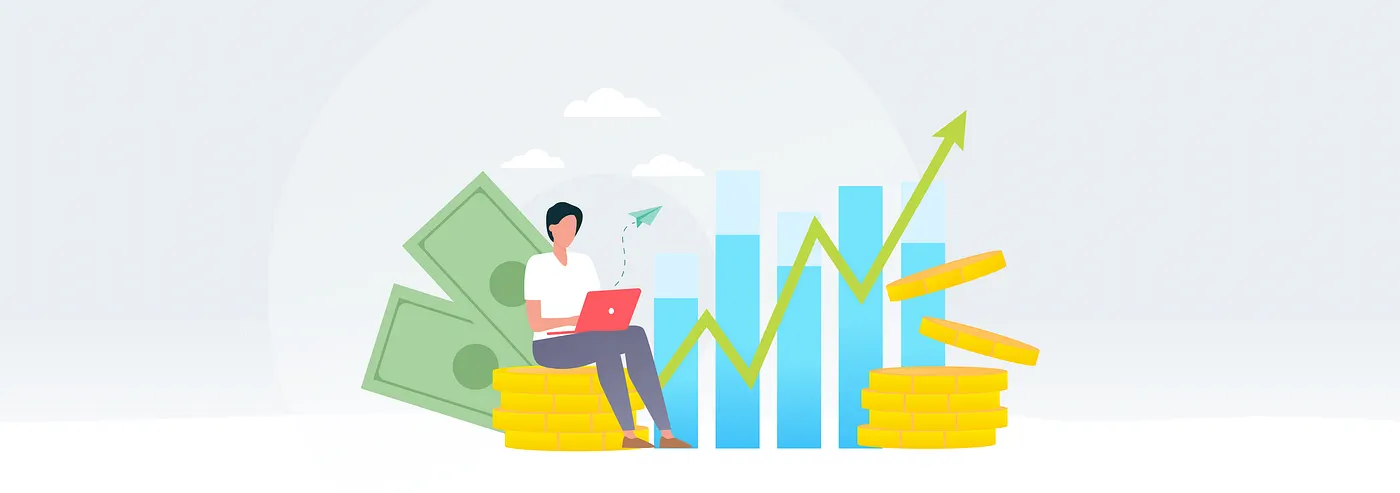
Everyone talks about investing. Is it just a buzzword? A lifestyle? Most of all, it is a way to make your money work out. A bit like exercise: both bring huge benefits in the long run, and both are hard to start. You may make some mistakes along the way, but learning from them makes you stronger. So how do you start? Don’t worry, we’ve got you. Below we look at the benefits of investing, the risks that come with it and some common ways to do it.
Investing means putting money into something you expect to grow in value or earn you income over time. You can invest in many ways: starting your own business, buying assets such as real estate, or buying stocks, bonds and funds.
Why invest?
You can beat inflation
Money loses value over time. To protect your savings, they need to earn more than inflation after tax. That is hard to do with money sitting in a low-interest account. Some investments have the potential (and the risk!) to beat inflation by a wide margin and earn you much more than a savings account.
You build passive income
One of the best money habits is building passive income from a young age. But even if you haven’t started yet, it is never too late. Regular extra income lets you enjoy life more, worry less about retirement, reach bigger goals (such as your kids’ education) and become more independent.
Be aware of the risks
The truth is, if it were that simple, everyone would do it. You don’t need to be scared of investing, but approach it rationally and keep learning. Staying informed and making considered decisions is what keeps you heading in the right direction. Risk is part of investing, and the trade-off is simple: lower risk usually means lower expected returns, and higher potential returns come with higher risk. The most important rule is not to put all your eggs in one basket. In other words, diversify.
Types of investments
There are too many types of investments to list, but here are the most common ones:
Funds
The most common funds are mutual funds and ETFs (exchange-traded funds). A mutual fund pools money from many investors, and a professional manager uses it to buy stocks, bonds and other assets. Many ETFs also pool money, but they are often passively managed and simply track a market index. ETFs have become very popular because they are easy to buy and usually cheap. Funds are a great way to start if you want to invest but don’t want to pick individual stocks. For example, many funds track the S&P 500, an index of about 500 of the largest US companies, and there are similar index funds for other markets and for the whole world. They spread your money across many companies at once.
Stocks
When you buy a stock, you buy a small piece of a company and become a part owner, a shareholder. If the company does well, the price of your shares tends to rise, and some companies also pay out part of their profits as dividends. Today, buying and selling stocks happens electronically and takes just minutes. People often use “stocks” and “shares” to mean the same thing: shares are the units of ownership you buy in a particular company.
Cryptocurrencies
Cryptocurrencies are digital currencies you can buy and sell on crypto exchanges. You have probably heard of Bitcoin and Ethereum. They can look very attractive, but their prices swing a lot, so they are a high-risk investment. Learn how they work before you buy, and only invest money you can afford to lose. If you hold crypto, you can track it in a separate wallet in Spendee next to the rest of your money.
Bonds
A bond is like a loan that you give to a government or a company. In return, you get regular interest payments and your money back when the bond ends. Bonds are usually less risky than stocks, although that depends on who issues them, and they often play a steadying role in a portfolio.
Commodities
Commodities are raw materials used to make other goods. Trading them is ancient, going back centuries to when people traded spices and precious metals. Today, investors mostly use them to diversify, investing in metals (such as gold or silver), energy (such as oil or gas) or agricultural products. Their prices are often volatile, which makes them riskier than many other investments.
How can you start?
First, make sure your emergency fund is ready. This is your safety net of “don’t touch this” money, usually 3 to 6 months of your average expenses. It matters because investing comes with risk, and you should only invest when you can handle any outcome.
Second, think about your own situation and attitude. Are you more of a risk-taker or more cautious? What return do you expect, and how long can you leave the money invested? Investing is very personal, but people often take more risk when they are young and become more conservative with age. Write down your goals. What do you hope to achieve and learn along the way?
Once you are ready, there are two main ways to start:
1. Self-managed investing
If you like doing things yourself and don’t mind a lot of learning and some ups and downs, this might be for you. Open an account with a regulated broker that has low fees and an easy-to-use platform.
2. Professionally managed investing
If you prefer to have a professional manage some of your money, expect to pay extra for their expertise. That can be a financial advisor, a managed fund or an automated investing service. Compare the fees, because they eat into your returns over time.
Whichever you choose, start with small steps. Starting young with small amounts is better than never starting at all. Realizing that your hard-earned money loses value over time is tough, but it can motivate you to do your research and take the right steps for your future. To see how regular contributions can grow over the years, try our savings calculator.