









































Life is full of surprises. Some are small, others can turn everything you have worked for upside down. The main goal of money management is to spend less than you earn, so you can save. But is that enough? An emergency fund helps you separate “don’t touch this” money from savings you can invest or use for short-term and long-term goals, like education, travel, retirement or a home.
An emergency fund is money you set aside in an account only for unexpected expenses.
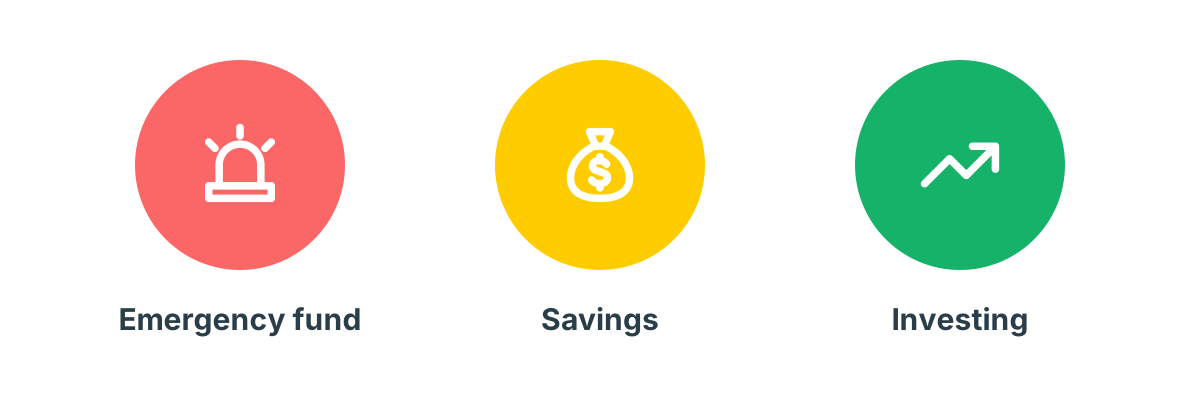
Divide your savings into these three categories.
Save money and train your self-control
What counts as an emergency for you? A broken car you need to get to work? A broken TV? Surgery you can’t put off? A flooded house? Maybe your brain screams “emergency” when you see a vacation at 70% off. But is it, really? Reading this list, you have probably already ranked these situations in your head. So what should your emergency fund cover, and what should come from other savings?
1. Job loss
Losing your job is stressful, and it may take a while to get back on your feet. This is exactly when an emergency fund helps. It gives you time to make the right decision about your next job (maybe even find your dream job) and keeps you from borrowing money in a hurry.
2. Health
Medical costs are hard to predict, and even with a healthy lifestyle you can end up in a tough spot. Medication, a broken arm, dental work or surgery may need to be paid for, depending on how health care works where you live. And it is not only about you. Think about the health of your closest family, kids and pets too.
3. Car
If you drive to work every day, your car is a necessity. That doesn’t mean your emergency fund pays for a new model or small maintenance. It means you have money ready if the car breaks down completely.
4. Unexpected family matters
Illness or the death of someone close can bring unexpected costs, which hit hardest when you live paycheck to paycheck. Find out what such situations might cost and how you can prepare.
5. Housing
If your roof starts leaking, use the money to fix it. If your heating fails in winter, that is an emergency too. But if your TV feels outdated or your washing machine gets louder over time, pay for it from other savings, not your emergency fund.
Sleep tight by doing it right
Putting money away can feel like it holds you back from buying what you want right now. Think of it as your freedom fund instead. Once your emergency fund is built, you don’t have to touch it until an emergency comes, and you have passed the first test of responsible adulthood. It keeps you free from debt and from borrowing in a hurry. Whenever you can, take the safe route and rely on your own money.
How big should your emergency fund be?
A common recommendation is at least 3 months of average expenses, and ideally 6 months.
How to build your emergency fund
-
Get a clear overview of your finances. Track all your income and expenses, either by hand or with a budgeting app.
-
Set up a budget. Not sure where to start? Our guide Budgeting 101 walks you through it.
-
Work out your average monthly expenses. Add up your expenses for the last three months and divide the total by three. If you use Spendee with a connected bank, your past payments are already sorted into categories, which makes this quick.
-
Start building your fund. Start small: make your first goal one month of average expenses. Keep tracking your spending and watch your savings grow every month. Our savings calculator shows how long it will take to reach your target.